Thursday, November 30, 2017

Collection Additions Volume 14: Catching up again

Hello dear readers and welcome back to the game room. Once again, I've taken quite a bit of time off from the 'ol blog. I'd like to say it's because I've been busy, but in the interest of full disclosure, I've just been pretty damn lazy. However, I haven't forgotten about it, and since forming opinions on video games constitutes roughly 40% of my daily thoughts, it's unlikely I'll stop posting any time soon. As long as I can get myself to keep writing, that is.

Anyway, seeing as I'm always buying new things, here's another edition of collection additions to tide you over until I get around to writing another review (which, by the way, I have several drafts of things sitting around on my computer waiting to be finished, so one of these days I will probably get around to finishing and posting them).


So first up, I've completed the Super Mario Bros. trilogy on the NES. I've had all the games for a while of course, but I wanted boxes for all of them because they're just such iconic games for the NES. I bought Mario 3 complete a long time ago, and it just looked lonely on my shelf without Mario 1 and 2 next to it. So, being the completionist that I am, I hunted down boxes for 1 and 2 and was able to get them both in decent condition and for good prices. The box for 2 is very good, but 1 is a little bit rougher around the edges. That's alright with me though, since I don't put too much stock in condition. It's got some creases here and there, but for a 30+ year old game, I'm happy to have a decent box for it at all.


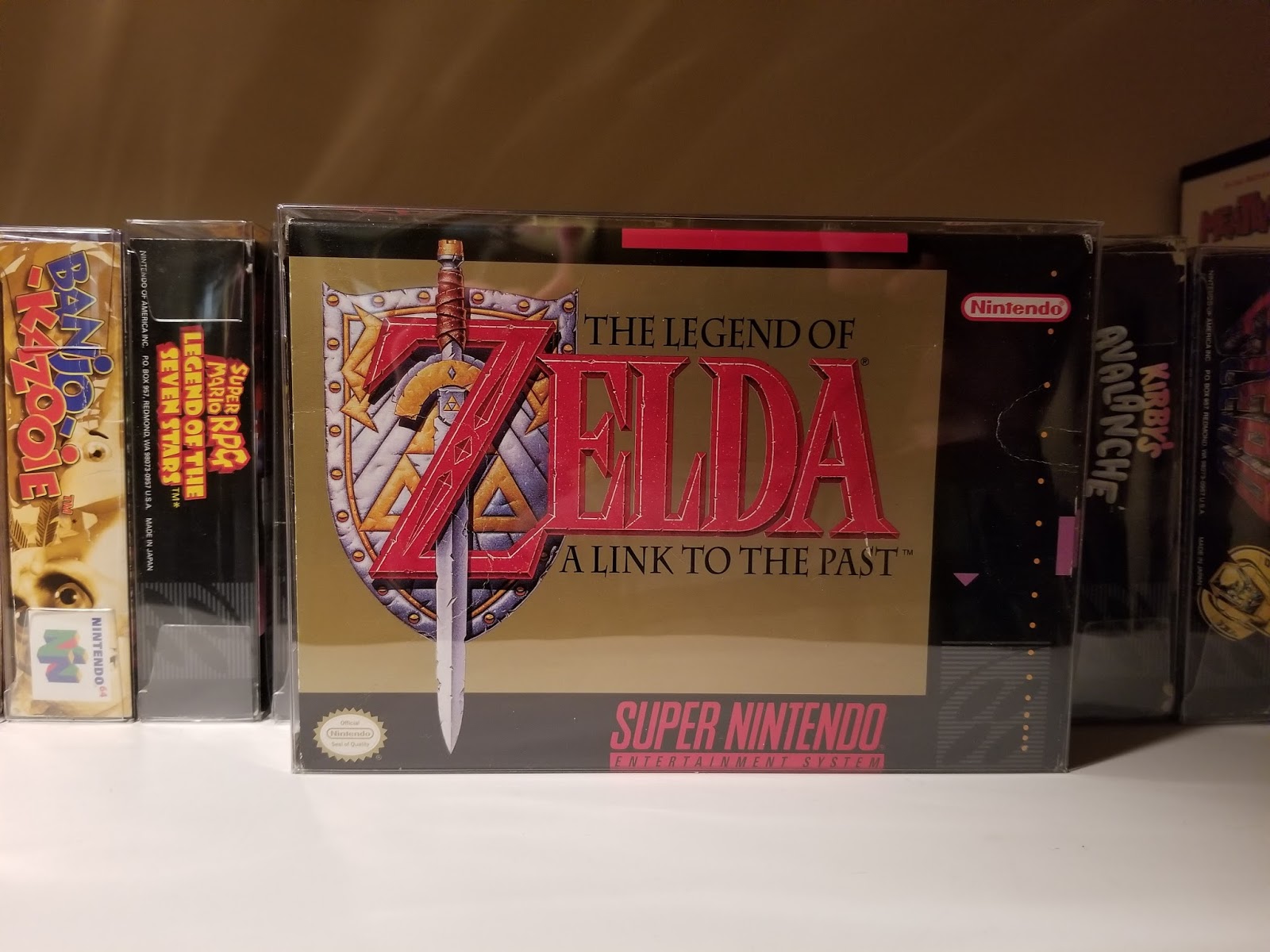
Speaking of boxes, I also picked one up for another iconic game, The Legend of Zelda: A Link to the Past. Once again, this was a game I had purchased a while ago that had just been sitting around on my shelf. Then, a few months back, I purchased a wholesale lot of manuals and boxes and such for SNES games on eBay, which came with the both the manual and the map from Link to the Past. With those two items in tow, I really wanted to get my hands on a box so I could complete the whole thing. I searched high and low for a while, sometimes finding decent ones, but never at a good enough price tag to justify purchasing it. Then, a few weeks ago I found a good one and jumped on it. Like the Super Mario Bros. box, it's got some creases here and there, but I'm happy enough with it.


Moving on to Sega Genesis, we have a game I've been meaning to pick up for a quite a while now: Ghostbusters. As you all should be aware of by now, Ghostbusters is one of my favorite things in existence (and if that statement doesn't convince you, read this review of Ghostbusters: The Video Game for Xbox 360 I did last year). I had never actually known about this game until seeing a review of it by the Angry Video Game Nerd a few years back, which is a real shame because I absolutely would have loved this game as a kid. I only had Ghostbusters II on NES, which is a fairly mediocre game but was still loved to death by me nonetheless, so I likely would've bought the Genesis one and played it nonstop, had I known of it back then. Anyway, Ghostbusters for Sega Genesis is actually on the more uncommon spectrum of Genesis games, so getting a nice complete copy is no easy task. I finally found a good one for a reasonable price recently, and now it's probably the second rarest Genesis game I own, behind Castlevania: Bloodlines.


Next up, we have MediEvil II for PS1. MediEvil was a game I played a long, long time ago on one of those random demo discs for the PS1 that you'd get from gaming magazines or video game stores. I liked it a lot, but never got around to buying the actual game until I was much older. I thought that it was possibly just nostalgia clouding my memory, but to my surprise, the game is actually really great. It sort of reminds me a little bit of Devil May Cry, before that was even a thing. I also had no idea that it had a sequel, so when I spotted it at my local retro gaming store, I had to pick it up. I haven't played it yet, but if it's anything at all like the first one, I'm sure it will make a solid addition to my PS1 library.


Next, a smattering of random games...NFL Football and Operation Wolf for the NES, and Super Punch Out!! for SNES. Very common NES games, two I'm not all that interested in, but when you can get a boxed NES game for under $8, it's pretty much always worth it. And now I can say I own an LJN game...perhaps the worst offender for bad games on the NES. As for Super Punch Out!!, I loved the original Punch Out!! on NES, so this one is a no brainer. I've never played it before but I've seen videos, and it looks just as fun as the original. I'll definitely check it out soon.


And lastly, we end on not an actual game, but an accessory. So, long before people built mods for their games in order to hack the game and do whatever they wanted with it, there was a little thing called Game Genie which seemingly allowed ultimate control over your video games. Want unlimited lives? Invulnerability? The ability to skip levels on command? Game Genie let you do it. It's interesting to think that we were actually using this thing to reprogram the game by rewriting it's coding right before our eyes. But we didn't know how the hell it worked, nor did we care- we just wanted to bend games to our will. I specifically remember using the Game Genie for Game Boy in order to hack myself a Mew in the original Pokémon. Anyway, this Game Genie for the NES is pretty beat up (as evidenced by the crack in the top covered up by an ancient blob of dried glue) and corroded-looking on the contacts, and though I haven't tested it, it likely doesn't work. However, what I find most interesting is the little code book that came with it. Back in the 80s and 90s the internet wasn't really a thing, so we had no way of looking up the codes. As such, this book was an absolute necessity in order to make the Game Genie work. I think some versions had pre-loaded codes on them, but it seems this one didn't.

Anyway, thumbing through the book is kind of interesting because it doesn't just list out the codes for a game, it actually has a little synopsis of each game and other little blurbs. I was also surprised at just how many games it has codes for: over 150, including some of the most popular titles for the NES.


It does get a little weird, however, when it starts talking about some strange and unintended effects that code alterations can have on your games. For example, look at this blurb in the Super Mario Bros. 3 section:


That's actually pretty funny, and not just because they spelled "Bowser" wrong.

Anyway, that's all for now. Thanks for reading and as always, game on.

Monday, October 30, 2017

Quick Thoughts: Crash Bandicoot: N. Sane Trilogy (PS4)


Hello dear readers and welcome back to the game room, where we always make time for obscure mammals that are primarily extant to Oceania. Today, I'll be heading downunda to discuss everyone’s' favorite Playstation Mascot, Crash Bandicoot.


Crash Bandicoot was easily one of the best games conceived for the Sony Playstation way back in 1996, and its duo of sequels for the PS1 are not too far behind it. The trilogy took 3D platforming to new heights and helped put the PS1 on the map as the premier console of the late 90s. Over twenty years later the Crash franchise has somewhat fizzled out, but it managed to make a big comeback earlier this year with the release of the PS4-exclusive N. Sane Trilogy, which combines the first three Crash games into one massive package. Having recently acquired a PS4 and being a huge fan of the original Crash games myself, this game was a must-have for me. Now that I've played through all three of the remastered games, I have a few lingering thoughts to get out.

First things first, all three of these games are just timeless. I was entertained just as much as the first time I played through any of them on the original Playstation. 

I was a bit intrigued when I heard how people were playing it and becoming unbelievably frustrated with how difficult it was. I never really thought the original games were all that hard, so I was interested to see if there really was a massive spike in difficulty. The result is...well, mixed. It's hard to explain, but I feel like it actually became easier in some aspects and more difficult than the originals in others. 

As an example of something made easier, in the original Crash, players had to break all the boxes in a level AND complete the level without dying in order to acquire gems. In the remake, this is only required of the levels with five colored gems and does not apply to the other 20 clear gem levels. However, I do feel that the controls for the original game did not translate all that well in the remake. 2 and 3 were fine, but for some reason I had a lot of difficulty on certain levels (namely, "The Road to Nowhere" and "The High Road") with the PS4 controller, which definitely did get frustrating after a while. However, this only happened on a few select levels and for the most part I did well enough with the controls.

In the way of new content, there's not a whole lot going on there. There's a few minor things- for example, you now how the option to play as Crashs' sister Coco in all three games on almost any level; however, she controls exactly the same as Crash and doesn't have any extra abilities or anything. Also, the time trials that were first introduced in Crash 3 were added to both 1 and 2, so players can now speed run any level in order to acquire relics (which don't really do anything for you besides fulfilling your sense of completionism).

The time trials work well enough for Crash 2, but in 1 I found that they are quite difficult to finish. I think it's because Crash 1 was not really built for speedrunning; its' levels were made in the early days of 3D platforming, which tasked players with progressing through levels slowly and deliberately. The levels are really hard to get through quickly AND without dying, especially the longer ones like "Native Fortress" and "Sunset Vista." Crash 2 was also a bit difficult in this regard, but a lot more forgiving and easier to cope with than Crash 1. Also, for some reason the developers added the "running" powerup to Crash 2 (which was originally granted in Crash 3 upon beating the game and allows Crash to run faster, making time trials way easier), but not to Crash 1.

 Due to the nature of early 3D platforming games, Crash 1 is not a very easy game to speed run.

The graphics and music are both updated pretty well. Even though both were (and still are!) wonderful examples of what the PS1 could do in the originals, the developers managed to keep that spirit intact for the remakes. 

In all, N. Sane Trilogy is both a nostalgic treat for fans of the originals, as well as an introduction to the franchise for a new generation of gamers. It might not necessarily justify the purchase of a PS4 on its' own, but is definitely worth the price tag if you already have one and are looking for some classic quality platforming action. Thanks for reading.

Sunday, October 1, 2017

Quick Thoughts- Devil's Crush (TurboGrafx-16)

Hello dear readers and welcome back to the game room, where I like my pinball games coated in a delicious mixture of skeletons, satantic imagery, and thrash-metal chiptunes. That sounds a bit specific, doesn't it?

Well, I am talking about a quite a specific and distinct game here, that being Devil's Crush for the NEC TurboGrafx-16.


From what I've gathered about life and the universe in my 29 years on the planet, pinball games and video games exist in two fundamentally different realms. They intersect at a number of points, but the bottom line is that pinball machines always involve some sort of physical manipulation as a measurement of skill, while video games can only simulate such manipulations at best. In current times that line is becoming a bit more blurred, what with things like VR, the Wii-motes, the Xbox Kinect, the Playstation Move and so on, which do involve some fundamentally physical movement in order to interact with a simulation. However, I'm talking about the early 90s here, where pinball and video games were just two different things, full stop. What does this have to do with Devil's Crush? Not much, I'm just kinda thinking out loud (or, in text).

But where I was going to segue there is that the two have been combined in the interesting specimen of pinball video games, which have existed as far back as the age of Atari in the 80's. That's been a concept that's always interested and perplexed me at the same time. How does one go about meshing the mechanical manipulation of a silver ball with a simulated experience? Why not just go play an actual pinball machine, if one desires an authentic experience? What's the point of getting a high score if you and your friends and siblings are the only ones who will ever see it?

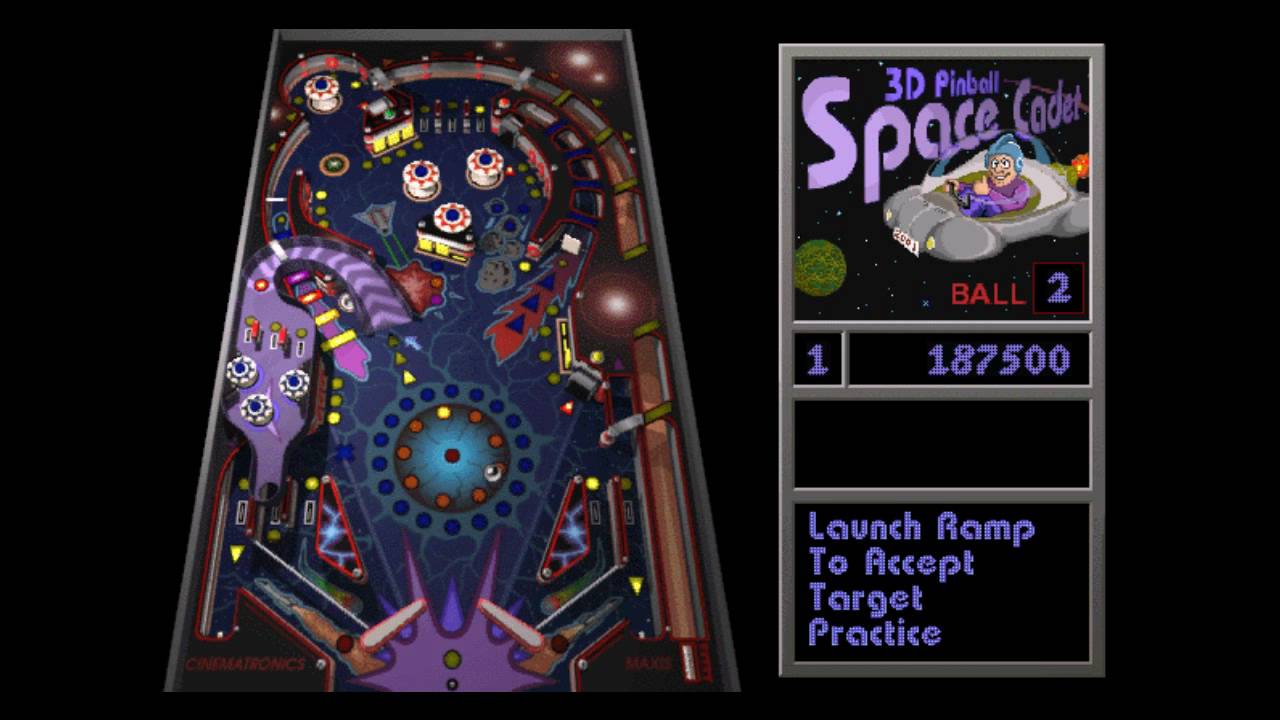
For that reason I've never really gotten into pinball-themed video games (minus that one that came with Windows XP that every millenial knows well), but I'm willing to give them a try if a good one comes along. Devil's Crush is one such good one.

I've already mentioned ad nuaseum in previous entries that the TurboGrafx-16 really fascinates me, and I've mentioned Devil's Crush's cousin Alien Crush in a previous entry as well. So when I received my tax return recently and went straight to my local retro gaming store with a bag of cash, I walked out with a boatload of TurboGrafx games I'd never played before and a newfound appreciation for some obscure and rare games.

The first on my list to try out was Devil's Crush, and I was not disappointed by it in the least. The first thing I noticed was the music. Holy crap. Ever wondered what Slayer would sound like if you fed one of their albums into an 8-bit processor? If you play Devil's Crush, you'll get an idea. It's awesome, probably the best I've come across on the TG-16 thus far.

The graphics are quite nice. The movement of the ball is quite smooth, and unlike its predecessor Alien Crush, the screen moves seamlessly between the upper and lower portions of the pinball arena instead of cutting back and forth between the two, which can be pretty jarring. The arena looks like something Danzig would come up with if he made a pinball machine- there's skulls everywhere, medieval knights, a disembodied female head which slowly transforms into a reptilian monster, and a pentgram with robed figures circling around it. In a word, it's fuckin' awesome.


There's a number of little mini-games interspersed throughout to mix things up a little bit, but they mostly just consist of launching your ball at skeletons, demons, or other monsters to rack up points. I've never actually been able to beat any of these mini-games, but they're a fun change of pace.


I think the most fun I get out of the game is just rocking out to the tunes and enjoying the graphics while trying to keep my ball in play. Which, I suppose, is the entire point of pinball, but I digress. There's not a whole lot to say about it otherwise, but it's definitely a game that will keep you entertained for quite a while and probably one of the most noteworthy titles for the TG-16 that I've encountered thus far. So if you like pinball, metal, the occult, and you've always wanted to see all of those things in pixelated video game format, Devil's Crush is for you. It's a must-have for TurboGrafx-16 fans, as far as I'm concerned. Thanks for reading.

Monday, September 11, 2017

Collection Additions Volume 13: From old to new


Hello dear readers and welcome back to the game room. It's been a while since I've done a collection updates edition, and I certainly have not slowed down on that front. I've purchased quite a bit over the last few months, evening out my collection with various ins and outs across several different consoles. That's said, let's check out what I got.


First off, we have a bunch of complete black box games for the NES. I often have these random thoughts where I suddenly decide that I want to focus on a certain thing, and for a while I was fixed on obtaining complete so-called "black box" games for the NES. For those who aren't aware of the history, the "black box" NES games consist of 17 games that served as the launch titles when the console was first released in America in the Fall of 1985, plus an additional 13 games that came shortly afterward. The 30 games are collectively known as the "black box" games due to their black color and similar artwork scheme. Anyway, there's something just incredibly aesthetically pleasing to me about these games, so I wanted to try and grab a few complete ones, mostly the easier-to-obtain ones. Golf, Pinball, and 10-Yard Fight were very easy to find for cheap, while Gumshoe and Popeye proved a bit more of a challenge.


Next, we have something I've been meaning to buy for quite a while- Zelda II: The Adventure of Link. Everyone knows that The Legend Of Zelda is an absolute classic, and owning it is a must for anyone who has an NES. But what of its lesser known sequel? People have a lot of mixed feelings about Zelda II, but I believe the general consensus is that it is vastly inferior to the first game. At any rate, I've never actually played it myself, and my complete copy of the original looked very lonely on my shelf without the sequel next to it, so I knew I eventually had to get a complete copy of that one as well. It took me quite a while to find one in good condition for a reasonable price, but I jumped on it once I did, and now I can put them together and feel that much more complete about my collection because of that. Well, that is until I realized that the actual title is "Zelda II," meaning I'd have to put it at the very end to maintain alphabetical order. Have I ever mentioned I am a fantastically huge nerd?


Here's a great flea market find I made: a complete copy of Mario Paint for Super Nintendo. For the uninitiated, Mario Paint was basically Nintendo's version of Microsoft Paint, complete with it's own mouse peripheral that could be plugged into the Super Nintendo. You could draw freehand, use pre-rendered backgrounds to color, and even make simple animations and music. There were also a few mini-games thrown in as well. It might seem primitive for today's standards, but back then this game provided hours upon hours of entertainment, all without really having much of an objective as a game. It's a very common SNES game, but what isn't so common is finding it complete with the giant, oversized original box, as well as the mouse, a plastic mousepad, and all the instruction booklets with it. The only thing missing from my copy is the inner styrofoam tray that held everything, but considering how cheap I got it for at the flea market, I'm not complaining.


Moving up a few generations, here's two Gamecube games that stand out in the Gamecube library: The Legend Of Zelda: The Wind Waker, and Metal Gear Solid: The Twin Snakes. Another Zelda game here, and I suppose now is as good a time as ever to say that I honestly have not played very many Zelda games in my lifetime. I own a bunch, but out of those I have only really played the original, Ocarina of Time, and Link's Awakening (the last of which I've never beaten). That said, with the purchase of two more in the series, I hope to change that soon so I can call myself a proper gamer. The Twin Snakes is quite an interesting specimen, as it's an updated remake of the original Metal Gear Solid (which, if you're keeping score, is technically the 3rd installment in the franchise). I'm not sure if much else was changed besides updated graphics, but I'd really like to play it soon and find out. It also apparently includes Metal Gear Solid 2 as well, which is probably one of my favorite games of all time.


And last but not least, it may not be related to retro games, but I'd be remiss to not include my most recent addition, a Playstation 4 console given to me by my girlfriend for my birthday. I may be about 4 years late to this party, but between games like Resident Evil 7, The Evil Within 2, and Sonic Mania being released or coming soon, I felt that I now had enough of a reason to obtain a current-generation console. Sonic Mania is definitely at the top of the list for me, and I plan on purchasing it later this week, so look forward to a review of that in the future after I've played it through.

So that's all for now, thanks for reading and as always, game on.

Friday, August 18, 2017

Quick Thoughts- Halo 4 (Xbox 360)

Hello dear readers and welcome back to the game room, where we're always slightly behind the times but still ready to offer an in-depth analysis. Somewhat.

Anyway, today's behind-the-times review comes in the form of Halo 4, which I decided to pick back up recently because I wanted to shoot aliens and I can't afford an Xbox One, and also because I realized I never completed the game on Legendary mode, the hardest difficulty level. Released in 2012, Halo 4 was, from what I understand, lampooned by fans because it strayed too far into the "Call Of Duty" realm that has nearly consumed all modern first person shooters. I agree with that to an extent, but I don't think it necessarily "killed the series," as some have claimed.


Picking up three years after the events of Halo 3, the Master Chief and his A.I. companion Cortana have been drifting aimlessly in space when they are suddenly attacked and boarded by a Covenant armada. This, within the first 2 or 3 minutes of the entire game, is kind of where they lost me.

See, by the end of the events of Halo 3, the humans had reached a resolution with the Covenant, finally ending the long standing conflict between the two. However, three years after Halo 3 came out, a prequel to the original Halo was released called Halo: Reach. I have never actually played this game, but from what I understand, it takes place shortly before the events of the first game, where the humans are at the apex of their war with the Covenant. Naturally this game would have to portray the Covenant as enemies again, and they did so by totally redesigning all of the Covenant aliens and making them even more intimidating and fierce looking than they were in the original games.

That's all fine and good, but what does this have to do with Halo 4? Well, Halo 4 portrays the Covenant exactly the same way that Reach does. But wait, aren't we friends with the Covenant now? The game explains this away in that Chief and Cortana just run into a "rouge fleet." Oh come on. That's the best you can do? You couldn't just think of another explanation as to why the two factions would be at war again? It all just seemed like a really lame excuse to keep the style of Reach intact while continuing the main story. 

The Covenant was made menacing again thanks to the powers of exposition.

Anyway, that minor detail aside, Chief and Cortana have some other problems as well: Cortana is is beginning to experience "rampancy," which basically means she's falling apart. Thinly vieled metaphors for neurodegenerative disease aside, the other problem they must deal with is the Prometheans, the new threat that has joined forces with the Covenant. Who are the Prometheans? Uh...something something something Forerunners. You know, the beings that built all of the Halo installations. Sorry, I pretty much skipped all the cutscenes this time around due to lack of interest.

The Prometheans are being controlled by the Didact, the big bad of this game who was imprisoned in a floating ball for some reason...and now...uh..he wants to destroy the universe...or something...

Sorry, I'm just gonna stop trying to explain the story and discuss the gameplay.

Halo 4 throws a lot of new things at you in the realm of controls. There's now running, special item usage (i.e. jetpacks, shields, hologram-decoys, etc.) and a lot of new weapon mechanics. Actually, potentially none of these things are "new" because they may have already been implemented in Halo: Reach, but they were new to me, so that's what I'm going with here.

Again, I can see what they were complaining about here in making it more like a Call Of Duty game, but it still does feel like Halo to an extent. You've got all the classic enemies from the Covenant dropping by to throw a plasma grenade at your face, plus the new Prometheans, as I mentioned before. The Prometheans are all kinds of annoying. You thought the Elites were tough to kill? It seems like the developers intentionally made the Prometheans obnoxious just to give you that much more of a headache while you're trekking through a level on legendary mode.

They come in a few different flavors: there's these little dog-like things called Crawlers which will come running in and surround you in a circle. They aren't too dangerous on their own, but a group of them can easily overwhelm you and since they'll be running around at high speed, it can be a pretty frustrating affair to take them all out. Then there's the big guys, the so-called Promethean Knights, who I think look a lot like the aliens from the movie Independence Day. These guys will do everything in the book to annoy you. They can teleport away when being fired at, they'll use heavier weapons on you (some of which can instantly kill you), they'll run and hide when their shields are down and when you chase after them to finish them off, you'll likely be attacked by a group of Crawlers which will buy the Knights enough time to escape.

 It's all I thought about when I saw them.

But by far the most obnoxious enemies are the Watchers, which are these little drone things that buzz around in the air above the Knights and Crawlers. These things were specifically made just to piss you off. They don't really attack you directly, but they'll provide shields for other enemies, they'll catch grenades that you throw and hurl them back at you, and they'll even resurrect Knights which you've just killed if you aren't paying attention. And worst of all, these little pricks will quickly fly away the second you attack them. It doesn't take that many shots to take them out, but if you focus on one and start to shoot it, it will swiftly buzz away and you'll need to chase it down, leaving you open to attack from other enemies. This got me killed more times than I want to admit to and made me hate these things so much I'd be screaming at my TV just trying to destroy all of them.

However, like everything else in Halo, you can certainly make it through with a little perseverance. There's a boatload of hidden easter eggs to find and achievements to unlock if you wish to squeeze every drop of content out of the game, but I honestly couldn't really be bothered anymore- I just wanted to beat it on Legendary and call it a day.

And so I did, first playing through on Heroic mode before switching over to Legendary for one more go-through. There are certainly a few high points of the game. Among my favorites was getting the opportunity to actually pilot a Pelican, which are the classic drop ships that you had previously only hitched a ride on in previous games. Getting to fly it around and fire crazy powerful weapons at enemy ships was a ton of fun, even though you only get to do it for a fairly miniscule portion of the game. My other favorite moment was the chapter "Reclaimer" in which you rode around on the massive "Mammoth" which looks a lot like the Sand-Crawlers from Star Wars and provides you with a slew of heavy weaponry and vehicles to battle the Covenant. You also get this little gizmo called the "Target Designator" which allows you to lock onto certain targets and then annihilate them with a massive laser from space. Pretty awesome.

Ever wanted to fire a giant laser from the sky? This was your chance. No, I have no idea what you mean by "Gears of War did it first."

But by the end, I didn't quite feel the same sense of achievement upon beating the game on Legendary as I did with the previous entries in the series. I don't know, maybe I've just gotten more cynical as time has gone on (the original came out nearly SIXTEEN YEARS AGO after all), but it just kind of felt like "eh, whatever" compared to the epic finales of prior games. Oh well.

In all, it does feel somewhat different from the previous Halo games I've played. I suppose that's largely due to the departure of Bungie studies, which had developed all of the prior games in the primary series, but I can't tell you for sure. It just has a much different feel to it. Does that make it bad? Not really. Forgettable maybe, but certainly not bad. At the very least, worth a playthrough if you were a fan of the originals. And this isn't even getting into the multiplayer portion of the game, which I didn't play nearly as much as I did with Halo 2 and 3 but still provided quite a bit of fun.

To sum it up, no, Halo 4 is not as good as its predecessors. But did it kill the entire series? I wouldn't say so, because if I had enough time and effort and energy, I still would've purchased an Xbox One and Halo 5. And maybe I will anyway someday, long after both of them have faded from the public spotlight (I kind of feel like they already are). But until then, I'll just have to stick to killing grunts the old fashioned way on the old fashioned consoles. Thanks for reading.

Saturday, June 24, 2017

The Importance of the Sonic The Hedgehog Comics


Hello dear readers and welcome back to the game room. I’ve once again been thrust into the mystical land of studying, so I haven’t had a whole lot of time for video games lately, let alone writing about them. However, I recently heard some news that sparked a long-dormant interest of mine that I’ve had since the year 1995. It isn’t really a video game itself, yet is inextricably tied to video games that I loved as a kid, and it’s something I generally have a lot of thoughts about.

Even if you’re just casually into video games, I’m sure you are aware of the Sonic the Hedgehog franchise. It’s something I’ve already talked about at length on this blog, seeing as it was one of the first video games I ever played in the early 90s and one of my cherished childhood franchises, right alongside Ghostbusters and Teenage Mutant Ninja Turtles. 


The video games are only half of what made me love Sonic so much though- the other half was the comic books. As a kid, I had a monthly subscription to the Sonic the Hedgehog comic book series by Archie Comics which I was absolutely obsessed with. There was nothing in the world more exciting than seeing a new issue in my mailbox at the turn of the month. Every time I got one, I’d instantly snatch it up and run to my room to read it. The stories were like an extension of the video games; when you were done playing one of them, the comics would continue right where they left off. And in addition to being its own standalone series, it also produced tie-ins to each new Sonic game that came out- Sonic Spinball, Sonic CD, Sonic & Knuckles, Sonic Triple Trouble, Sonic 3D Blast and more all saw their own comic book adaptations.

The reason this all has been brought to my attention is because word has recently spread across the internet that after a 24-year run and nearly 300 issues of the main series, the comic is finally being cancelled. There hasn’t been any formal announcement as of yet, but it’s been placed on an indefinite “hiatus” and the general speculation is that this is the end for the blue blur in the comic book medium.

Although I haven’t actively been reading the comic for probably 16 or 17 years now, it’s still kind of sad to think about, considering that I grew up with the series by my side. The Sonic the Hedgehog franchise has basically been the butt of every joke in the video game community for a long time now, but the comics, to me, represent Sonic is his prime. Looking back on it, it just makes me realize that a majority of the affection I feel for the franchise was not so much because of the games, but rather because of the comics. Anyway, with that in mind, I thought I’d do a little reflection on my personal experience with the series.

I arrived a tad late to the party, as the very first issue I had was #24, bought for me by my mom in May of 1995. The instant I read it though, I was hooked. In the beginning, the series didn’t have much of a narrative and each of the issues were lighthearted, goofy little stories about the evil but bumbling Dr. Robotnik causing trouble and Sonic and his gang of pals squaring off against him in a variety of different scenarios. The story went that Robotnik was constantly seeking to rule the world by turning animals into robots, all while polluting the landscape and converting everything into some kind of mechanized factory. So, basically the same story as the early video games. Sonic and his friends (dubbed the “freedom fighters”) had been driven into hiding in a secret forest hideaway called “Knothole Village,” where they would meet and strategize on how to take on Robotnik next in their ongoing underground revolution against him. 

The comics introduced some new characters to compliment Sonic in his adventures. There was Princess Sally, often the brains of the operation and Sonic’s semi-love interest, Antione D’Coolette, a snooty rival-type character to Sonic who was friendly but often resented him, Boomer (later called Rotor), the technical expert who often cooked up new gadgets for the team, and lastly Bunny Rabbot, who was half robotic thanks to nearly becoming “roboticized” by Robotnik before being rescued by Sonic and the team. And of course there was also Tails, who made his first appearance in the game Sonic 2. Tails was often portrayed as a young child, looked down upon a bit by Sonic and the others. This added to his characterization, and as time goes on he begins to resent this fact, which leads to him having his own 3-issue mini-series in which he proves that he can go on his own adventures and be a hero too.

Which leads me to another point- aside from the main series, there were often  individual “specials” that were released in between issues, some of which were the aforementioned game tie-ins, while others were mini-series’ that focused on side characters like Tails, Sally, and later, Knuckles. At first, the specials were just side stories that had nothing to do with the main series. However, later down the line these specials became very closely linked to the main series. The specials had to be ordered separately, since they were not delivered in the mail with your regular yearly subscription, so getting your hands on one felt like a real treat (and mind you, this was in the pre-internet age where we had to get our parents to actually send out for things in the mail).

Anyway, as the series went on, it gradually started to get more and more serious. It developed more of a solid narrative, with a lot of backstory devoted to Sonic’s and Sally’s pasts, Robotnik’s origins, the beginning of the revolution, and more of a focus on Knuckles, who didn’t appear until issue #13 but gradually became a mainstay of the series. In fact, Knuckles became so popular that he eventually got his own spin-off series that lasted for 32 issues, as well as various specials of his own (a fact that I spoke about in my review of the game Knuckles’Chaotix a while back). Knuckles develops much more as his own character, as Sonic’s nemesis who is not quite on his side yet not quite an enemy either.

 As Knuckles became more popular, he gradually earned his own set of comics.

It all culminates into a thrilling four-part story leading up to issue #50, where Sonic is framed for Sally’s murder and Robotnik develops a massive weapon with the power to annihilate everything. Wow. That took a turn, didn’t it?

Also, I should mention that the artwork for the early era was absolutely awesome. The panels are very well drawn, representing Sonic perfectly in still image format. I also totally loved the cover art, especially for some of the specials like the Knuckles mini-series (issue #1 pictured above) and the Super Sonic vs. Hyper Knuckles special (I'll get to that in a bit).

Anyway, even though the series would continue all the way to issue #290, issue #50 was pretty much the climax for me. After that issue my interest gradually began to wane, as I was getting older at that point and my interests were shifting to less cartoony things (after all, this was roughly around the time that I first played Resident Evil, which became my next obsession). I still continued to receive it in the mail all the way up to around issue #80, but by then it had changed so much since the old days that I completely lost interest. My mom had also gotten sick of buying it for me and finally stopped renewing my subscription.

Looking back now, I still feel a great deal of affection for issues 24-50, as well as a few other early ones that I managed to get my hands on. The story arc leading up #50 was amazing, including both the main series and the various specials and mini-series’ that complimented it. Rather than talk about it on a whole, I’ll just discuss a few personal highlights that I remember best from these issues.


As I mentioned before, issue #24 holds a special place in my heart as the very first issue I ever read. The plot involves an alternate universe in which Robotnik is the good guy, pursued by an evil version of Sonic and his gang of counterparts. This gang somehow crosses over into the regular Sonics’ universe and begins framing Sonic and his friends for a number of misdeeds. Sonic catches wind of this, which sparks a battle between good and evil duplicates- a classic story.


The next issue, #25, is a tie-in to the game Sonic CD in which Robotnik develops a robotic version of Sonic called “Mecha-Sonic,” which challenges him to a race across the massive “Stardust Speedway” zone, just like in the climax of the game. Sonic also has to deal with the fact that Robotnik has kidnapped a cute little fan-girl of Sonic named Amy, which was also a part of the game.


There’s issue #33, which is one of the very last of the “sillier” issues before things got more serious later on. In this issue, Robotnik has infected all of the freedom fighters with a deadly virus, except for Sonic, who is then shrunk down to microscopic size in order to combat the virus from inside of each of his pals.


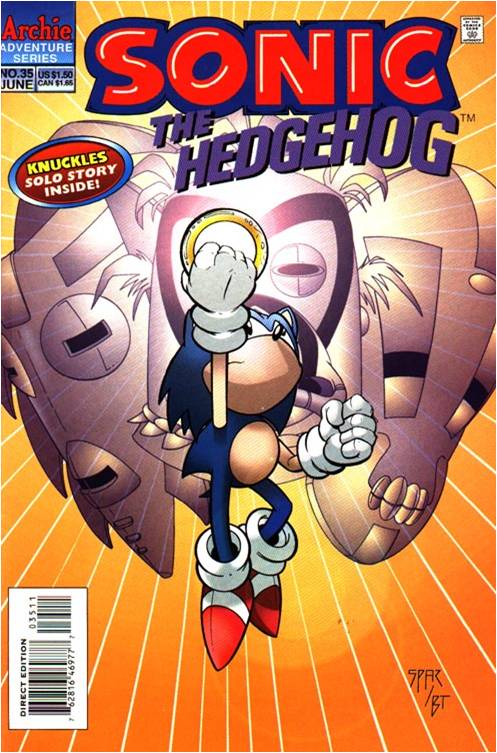
Then there’s issue #35, which is probably one of the craziest and most bizarrely creative issues of the entire series (at least out of the issues I remember, anyway). Upon collecting his billionth magic ring, Sonic is transported to a strange alternate universe, where he’s tested by the mythical “ancient walkers” who give him all kinds of mysterious and cryptic riddles. It’s so out there and weird, I remember loving it as a kid.


There’s also the “Mecha Madness” arc, which was a three-part story that included its own special. In issue #39, Sonic concocts a plan to let himself become roboticized by Robotnik, while using some kind of special microchip that would allow him to retain his own free will as a robot so he could then infilitrate Robotnik’s defenses. However, the rest of the gang denies his request by Sally’s royal decree, on the grounds that Sally herself attempted something similar in issue #29 to no avail. Sonic is pissed and leaves in a huff, only to ambushed and captured by Knack the Weasel, a character from the Game Gear game “Sonic Triple Trouble,” which had its own special as I mentioned before. 

Anyway, Knack delivers Sonic to Robotnik, who promptly turns him into a robot and sends him off to destroy Knothole village. One by one, Mechanized-Sonic kicks all of his friend’s asses, including Knuckles, who has joined in on the fight. All seems lost, which leads into the “Mecha Madness” special issue, which I remember begging my mom to order for me after issue #39 came out. In this issue, Knuckles is roboticized by Sally and the gang with the experimental microchip, which works well enough for him to fight back against Sonic in robotic form. The two kick the shit out of each other with Knuckles barely winning out. They are then transformed back to normal and everything is well and good…right? Nope. Once turned back to normal, Sonic is promptly arrested for treason, since Sally believes he defied her royal decree. Issue #40 starts with Sonic in prison, awaiting trial for a crime he didn't commit. He is eventually granted a chance to prove his innocence, and heads out to track down Knack and show that he was captured against his own will.

As I already mentioned, issue #50 ends on a thrilling note, with Sonic finally defeating Robotnik once and for all (seriously, he is actually DEAD after this and never comes back!). I thought the comic would actually end here (it was called the "Endgame" saga, after all), but it turns out that this was just the beginning; afterward Sonic finds many other foes to fight, but once again, I sort of stopped reading the comics after #50.

 Sonic actually fights Robotnik TO THE DEATH in issue #50. Think about that.

By far though, my favorite issue of the entire series was not even an issue from the main series, but a 48-page special released between issues 33 and 34 titled “Super Sonic vs. Hyper Knuckles.” In this issue, Sonic and Knuckles find a special zone where they each collect 50 rings and 7 chaos emeralds (just like in the games!) and transform into super-powered versions of themselves, then beat the total crap out of each other in an knock-down drag-out brawl. This was just amazing on so many levels. You didn’t even need to read the comics to know that the two were bitter rivals- at the climax of the video game Sonic & Knuckles, they square off with each other in a battle, only to put aside their differences when Knuckles realizes that they both have a common enemy in Dr. Robotnik. However, this moment is the only time the two ever actually fight in the games, and afterward they become friends.

In the comics, however, Sonic and Knuckles frequently clashed with each other, with neither ever admitting that the other was an ally. Actually, when Knuckles got his first mini-series set of side comics, the title described their relationship perfectly- “Sonic’s friendly nemesis.” So in “Super Sonic vs. Hyper Knuckles,” seeing the two in super-powered form pounding each other’s faces in was just incredible. I loved this issue so much that I still have my original one, which is almost completely falling apart, if not for the ancient pieces of scotch tape that are holding the spine together.

 My original copy of "Super Sonic vs. Hyper Knuckles," barely still in one piece.

Anyway, all this nostalgia filled me with a desire to read the first 50 issues again, even the ones I never had when I was kid. As such, I’ve started collecting issues, starting with the very first one. I’ve never been much of a comic book collector, and I definitely did not keep my originals in very good condition AT ALL; nearly all of them I owned have pretty much deteriorated into a pile of shredded paper. Thankfully, most issues are still readily available online for very cheap (with the comic’s imminent cancellation, this might change soon as more people like me suddenly want to relive their childhood!). It might take a while, but I think it will be worth it, as I can appreciate it on a different level as an adult.

This small stack is all I have left of my original comics that are still intact enough to 
read- the rest have been completely shredded beyond legibility. Hopefully I'll have more soon.


If you have an interest in the Sonic the Hedgehog series and you’ve never read any of them, I highly recommend checking them out. Whether you’re an old or a new Sonic fan, there’s enough there to satisfy your interests and then some.

So thanks for reading and remember, fun is infinite. Stay cool my fellow Mobians.